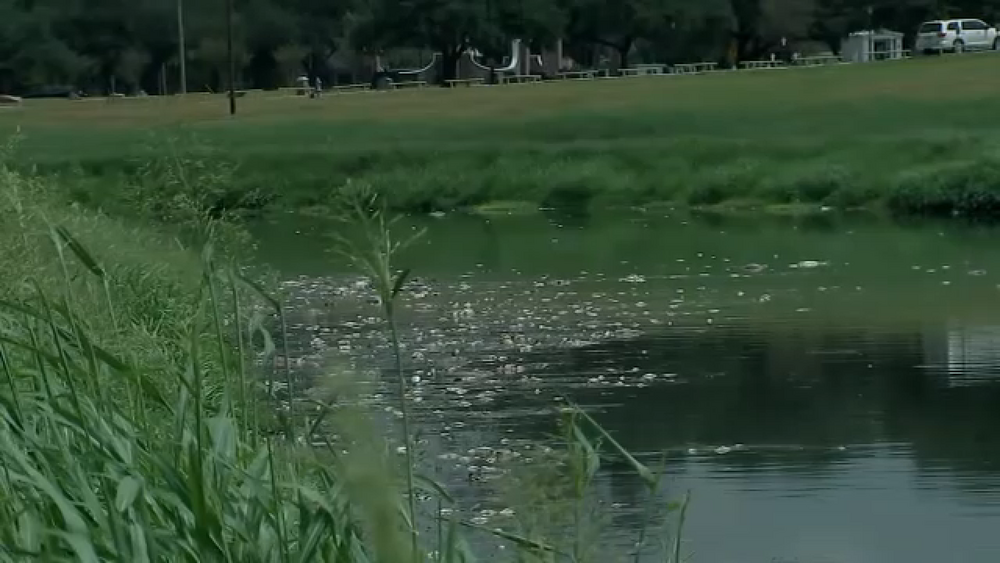
Red tide conditions detected in Bolivar Peninsula waters, Texas Parks and Wildlife Department says


GALVESTON COUNTY, Texas (KTRK) -- Texas Parks and Wildlife Department officials reported on Saturday that red tide was detected in the Gulf waters near the Bolivar Peninsula in Galveston County.
According to its website, TPWD reported fish kills and respiratory symptoms in the waters near Crystal Beach, with water samples collected on the Bolivar Peninsula indicating a "moderate concentration of red tide."
What is red tide?
Experts describe red tide as a higher concentration of a microscopic algae called Karenia brevis. The algae produces a toxin that paralyzes fish, resulting in "red tide blooms" that cause dead fish to wash up on Gulf beaches. When the algae appears in dense concentrations, they are often visible as red patches of ocean water, TPWD experts said.
While experts said they don't know the exact combination of factors that causes red tide, they explained that humans don't cause it, and the natural phenomenon has appeared in Texas waters from August through February in the past. The last time TPWD reported red tide in Texas coastal waters was October 2023.
Are beaches with red tide safe for people?
According to the Texas Department of State Health Services, swimming or wading in red tide water might lead to eye and skin irritation, such as redness and itching. Experts said symptoms usually go away after short-term exposure, though long-term exposure to red tide can cause symptoms hours or days after leaving the water. DSHS experts advise people not to swim or wade in red tide waters.
Experts explained that red tide toxins are not absorbed into the fleshy tissues of some marine life, so it is safe to eat fish, shrimp, or crabs if they are caught alive and acting normally. You should never eat any fish or shellfish that have washed ashore sick or dead, or were found belly-up, DSHS said.
Officials added that molluscan shellfish, like oysters and clams, that are legally available in markets and restaurants are safe to eat, as they were harvested from areas that the red tide bloom didn't affect. Officials explained, however, that molluscan shellfish that are caught in red tide water, even if they appear normal and are cooked through, are not safe to eat, as it can lead to Neurotoxic Shellfish Poisoning.
TPWD officials said that red tide is an "isolated, patchy phenomenon that does not blanket every stretch of beach", adding that there are generally miles of safe, clean water for the public. Experts advised travelers to follow Texas DSHS guidance and draw their own conclusions before heading to the Gulf beaches.
SEE ALSO: Videos showing fish kills in Houston-area bayous are due to recent rainfall, TPWD confirms